

-
2026/07/26 08:11
Who tops the international charts: Billboard – Madonna and her album *Confessions II*; the crypto sphere – Bitcoin and Ethereum
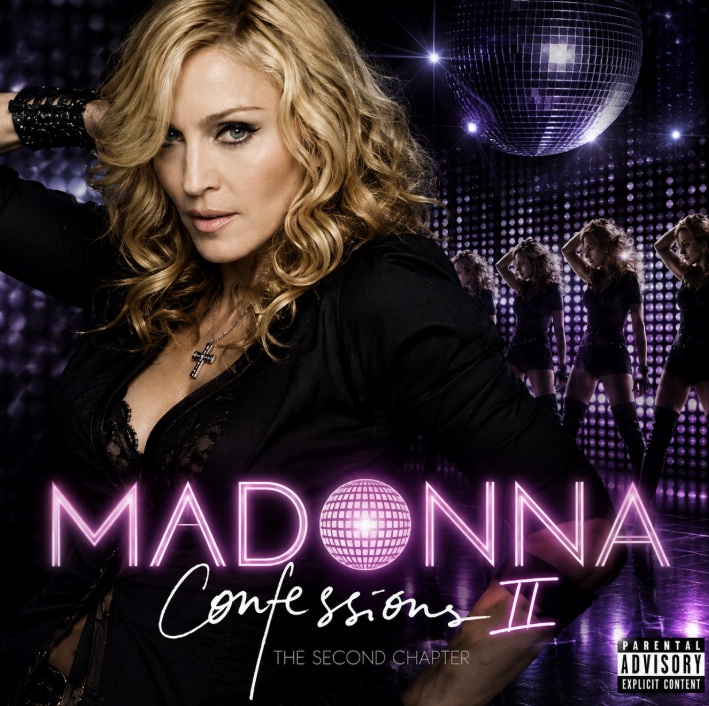
Madonna has once again proved that talent and legends never fade, and that the worlds of music and creativity are increasingly intersecting with the world of digital finance. The album ‘Confessions II’ debuted at number one on the prestigious Billboard 200 chart, becoming the singer’s tenth top-charting album and taking a well-deserved first place in the US charts. The release quickly amassed around 134,000 EQA (equivalent album units), including over 114,000 sales and downloads, as well as tens of millions of streams.
Madonna’s number one spot on the Billboard 200 and the dominance of Bitcoin and Ethereum in the crypto industry demonstrate that innovation is transforming both the music business and the global financial sector at an equally rapid pace through the economy. And we are no longer talking merely about casual interest in and the purchase of cryptocurrencies, but also about investments in blockchain platforms, digital payment solutions and NFTs. Moreover, for the music industry, blockchain opens up fundamentally new and vast possibilities: transparent copyright management, instant international royalty payments, the tokenisation of creative projects, and direct settlements.
Modern show business is no longer confined to recording studios – an increasing number of pop stars, singers, musicians and even music critics are closely following developments in Bitcoin (BTC) and Ethereum (ETH), blockchain and Web3. And the reason is obvious: cryptocurrency is being used more and more intensively and frequently as a tool for international payments, protecting a portion of savings and making fast cross-border transfers. Despite this, crypto-assets remain highly volatile and cannot be considered a full-fledged replacement for bank deposits or electronic accounts.
In the United States, among the best-known figures in the music industry who have publicly supported or invested in cryptocurrencies is the world-famous American rapper, producer, actor and businessman 50 Cent, who accepted payment in Bitcoin for his album ‘Animal Ambition’; rapper Nas – an early investor in Coinbase – and producer DJ Khaled, who has been involved in various crypto projects.
In Europe, the well-known rapper, songwriter, actor and music producer Snoop Dogg (USA) has been focusing on digital assets through British Web3 projects. Imogen Heap (UK) created the Mycelia project for copyright management and actively promotes blockchain. Björk (Iceland) – a singer, songwriter, composer and actress known for her unique vocals – released the album *Utopia*.
In Asia, G-Dragon (South Korea), JJ Lin (Singapore) and musician Yoshiki (Japan) have spoken out in support of blockchain and collaboration.
International rankings are increasingly showing a common trend: success in the 21st century is shaped at the intersection of creativity, modern technology and financial literacy, and an ever-wider circle of people view blockchain not only as a financial investment but also as a tool for business development.The leaders in the adoption of crypto technologies remain those countries where digital finance is being actively integrated into the creative industries, creating new sources of revenue and competitive advantages. In the crypto market – Bitcoin and Ethereum. BTC continues to play the role of the primary digital reserve asset, whilst Ethereum remains the largest ecosystem for decentralised finance (DeFi), smart contracts, NFTs and the tokenisation of real-world assets. Importantly, altcoins linked to blockchain scaling, artificial intelligence, asset tokenisation and decentralised infrastructure hold significant promise.

Is the US blocking Bitcoin for 20 years against a backdrop of over $40 trillion in debt?

18 Stolen Bitcoins, or Why You Shouldn’t Take a Photo of Your Seed Phrase
Revolut data breach: are hackers blackmailing customers, and are their passports, IBANs and Bitcoin transactions at risk?
Trump’s crypto profits of around 2.5 billion versus investors’ losses of nearly 5 billion: has politics become part of the business model?
Crypto trader hits the jackpot, turning $1,491 into $1.2 million in 7 hours