
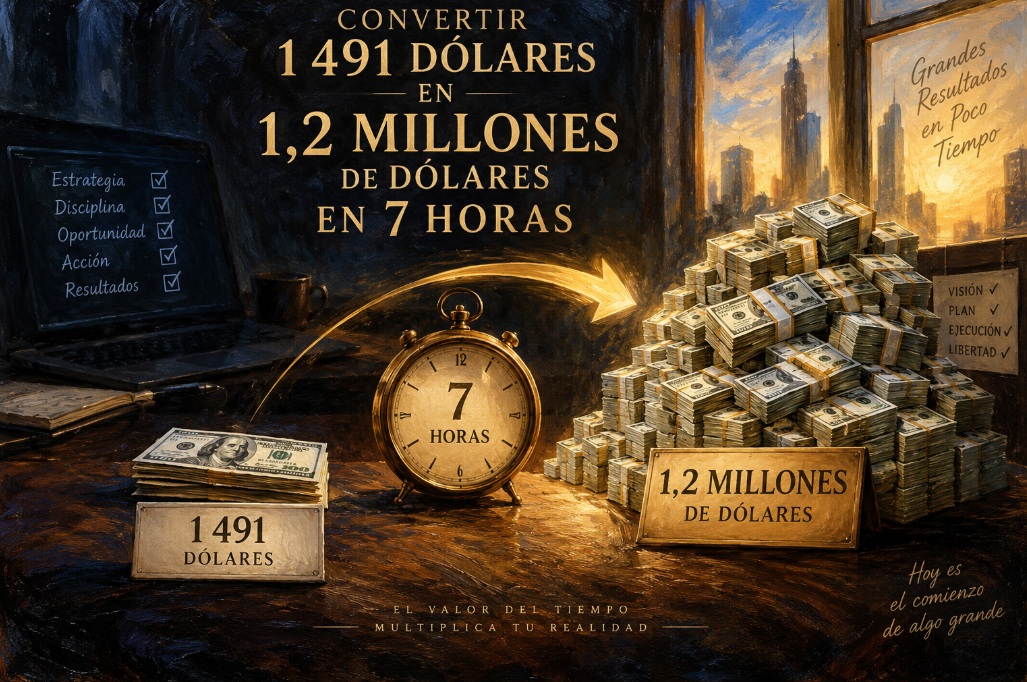
Crypto trader Rohun Vora turned $1,491 into a position that was valued at approximately $1.2 million at its peak. The trade involving the meme coin A Meme Coin (AMC) yielded a return of over 80,400 per cent in less than seven hours. But behind this story lies not a financial miracle, but the main problem with meme coins – numbers with lots of zeros on the screen do not yet mean money in a bank account.
According to Lookonchain, on 4 September 2026 at around 05:00, Rohun Vora purchased approximately 11 million AMC tokens, spending around $1,491. At that point, the project’s market capitalisation stood at just around $135,000. Roughly seven hours later, it soared to $109.9 million, and Vora’s holding was already valued at approximately $1.2 million.
The maths is astonishing: the initial $1,491 increased 805-fold to an estimated $1.2 million. Unfortunately, Rohun Vora did not lock in a $1.2 million profit. His position remained open, and so its value depended on the current price of AMC. After peaking, the token began to fall, and the value of the holding dropped to approximately $980,500.
It is also important to note that if an asset has risen sharply in price but cannot be sold in large volumes without causing a price crash, the stated ‘profit’ may turn out to be significantly greater than the money actually available.
The scale of the meme coin’s price movement also appears aggressive. AMC’s market capitalisation subsequently exceeded $180 million, although it has since fallen significantly; at the time of PSM’s publication, the trading volume stood at around $154.5 million, whilst locked liquidity amounted to approximately $10.3 million.
The American AMC is not the same as the issuer of the meme coin
The name ‘AMC’ further fuelled the explosive situation in the public sphere. This refers to the meme coin ‘A Meme Coin’, not the shares of the American company AMC Entertainment Holdings.
It was precisely the tokenisation of AMC Entertainment shares in September 2026 that sparked a high-profile conflict between the American company’s CEO, Adam Aron, and Robinhood’s CEO, Vlad Tenev. Aron stated that AMC had no connection to the tokens representing its shares and had not approved them. Meanwhile, Robinhood is defending its own model.
Robinhood issues the tokens through Robinhood Assets (Jersey) Limited. It is important to note that this refers to Jersey – an island forming part of the Channel Islands – and that the tokens are intended for investors outside the US and are not ordinary shares carrying shareholder rights.
In fact, the fantastical story of $1,491 turning into $1.2 million demonstrates that a meme coin with a market capitalisation in the hundreds of thousands of dollars is capable of creating a massive paper profit in a matter of hours, only to lose it just as quickly.
For the average investor, the greatest danger here is not volatility, but the belief in an extreme one-off outcome, as research into the meme coin market reveals widespread instances of artificial price manipulation, wash trading and pump-and-dump schemes. Consequently, in the world of memecoins, there can be a chasm of liquidity, spreads, price drops and panic selling between a million on the screen and a million in your account.