
-
2026/05/29 17:00
Top destinations for a quality holiday where you can pay with cryptocurrency without being scammed
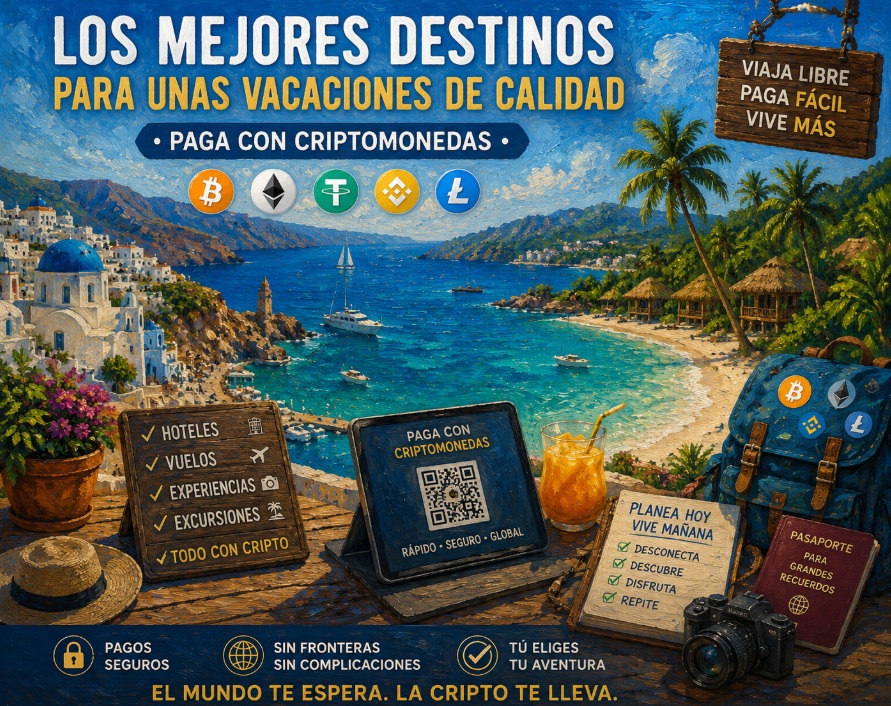
In 2025–2026, the tourism market is changing, and an increasing number of premium tourist destinations are accepting cryptocurrencies – and it’s not just Dubai, Barcelona, Lisbon or Bangkok. However, the number of fraud cases is also rising, with fake travel agencies using counterfeit hotel websites, deepfakes with ‘positive reviews’, clone sites, chatbots, artificial intelligence and social engineering.
To ensure cryptocurrency becomes a marker of a quality holiday for you, it’s worth looking after your own comfort and booking a trip to anywhere in the world. The leading destinations for relaxation, and those most crypto-friendly to foreign tourists, take your preferences into account and offer luxurious locations with a tropical climate, stunning beaches, modern entertainment complexes and shopping centres where you can pay with crypto.
Top destinations for a quality crypto holiday
1. Dubai, UAE
The city is renowned for its ultra-modern architecture, luxurious shopping centres and large-scale entertainment complexes. It is one of the world’s leading tourist destinations and one of the most crypto-friendly destinations. High level of security. Thanks to government initiatives, many hotels and services officially accept BTC and USDT.
2. Miami, USA
Miami is synonymous with premium service. The city in south-east Florida, situated on the Atlantic coast in Miami-Dade County, actively promotes cryptocurrency. It is a financial, tourist and cultural hub with a tropical climate, renowned for its beaches, the Art Deco district in Miami Beach and its vibrant atmosphere.
However, there are a large number of fraudulent pseudo-travel agencies, and the acceptance of cryptocurrency in hotels is not yet widespread.
3. Lisbon, Portugal
Lisbon is the picturesque capital of Portugal, combining the grandeur of a former maritime empire, unique architecture, vibrant contemporary culture and atmospheric music. You can pay with cryptocurrency (BTC, ETH, USDT and USDC) both directly at establishments and via modern payment solutions.
4. Bangkok, Thailand
As the main tourist hub of South-East Asia, Bangkok is the ideal city for cultural, gastronomic and other types of tourism. Thailand operates the state-run TouristDigiPay programme (a crypto sandbox), which allows foreign tourists to convert BTC, ETH and other digital assets into Thai baht (THB) and spend them in hotels, restaurants and shops.
5. Barcelona, Spain
Barcelona is renowned for its charm in the tourism sector. Cryptocurrency can be used to pay for restaurants, hotels, tours and tickets. However, due to strict EU financial regulations (in particular the MiCA directive), most transactions take place via specialised services.
6. Tbilisi, Georgia
Despite the fact that Tbilisi has a well-developed crypto industry (mining, favourable regulation of digital assets), tourist services accepting crypto payments are more the exception than the rule.
7. Bali, Indonesia
Bali, despite its high popularity among crypto enthusiasts, does not particularly appeal to cryptocurrency users. The island’s authorities are actively cracking down on crypto payments in the tourism sector, and therefore using crypto for payments in hotels, restaurants or shops results in severe penalties.In today’s climate, fraud in the tourism sector is becoming much more common – especially when services are paid for in cryptocurrency. To ensure that cryptocurrency becomes a marker of a quality holiday, before booking a trip, it is worth checking a few critical points: the legitimacy of the travel company – does it have a physical address and office (Google Maps, Street View) – and the terms of payment for the tour.
Check whether the company is listed in official registers and look for reviews on independent platforms, not just on the travel firm’s own website. After all, a fake site or clone is usually newly created and often differs by just one letter; it has no history and provides minimal contact details.Reliable operators offer alternative payment methods (card, bank transfer), and use contracts and invoices. If a tour operator only accepts payment in cryptocurrency, this is a scam in 99% of cases and you will not be able to get your money back. Scammers often ‘sell’ non-existent tours or other people’s bookings. In addition, always check your ticket booking (PNR code).
There must be a written contract, either as a PDF or on paper, with clear refund terms, liability of the parties and other legal guarantees.
Before payment, you should always verify the wallet address via blockchain explorers. After all, clipboard hijacking (address spoofing) is one of the most common scams used by fraudsters.
Particular attention should be paid to a phenomenon known as ‘fake investment tours’, where holidaymakers are offered ‘luxury holidays + crypto profits’.Although modern scams have become more sophisticated due to the use of AI, a quality holiday in 2026 where you can pay with cryptocurrency is an interesting leisure option that is gaining popularity. Cryptocurrency will always be a tool for premium services for those who approach their holiday choices rationally.
Revolut data breach: are hackers blackmailing customers, and are their passports, IBANs and Bitcoin transactions at risk?

Trump’s crypto profits of around 2.5 billion versus investors’ losses of nearly 5 billion: has politics become part of the business model?

Crypto trader hits the jackpot, turning $1,491 into $1.2 million in 7 hours

The price of 1 Bitcoin is set to exceed $100,000. When will this happen?

The ‘debasement trade’ strategy: Cryptocurrency prices have risen, with Bitcoin trading at up to $80,000