

Whilst the international financial market is actively exploring and integrating digital assets, the automotive industry is undergoing a major technological transformation. Cryptocurrency and blockchain, artificial intelligence and car manufacturing are increasingly developing as closely interlinked sectors. International analysts believe and repeatedly emphasise that the use of stablecoins for international settlements and corporate payments has enormous potential. As stablecoins enable fast cross-border transfers and reduce currency conversion costs, more and more companies are viewing digital assets not only as an investment tool but also as a useful component of modern financial infrastructure.
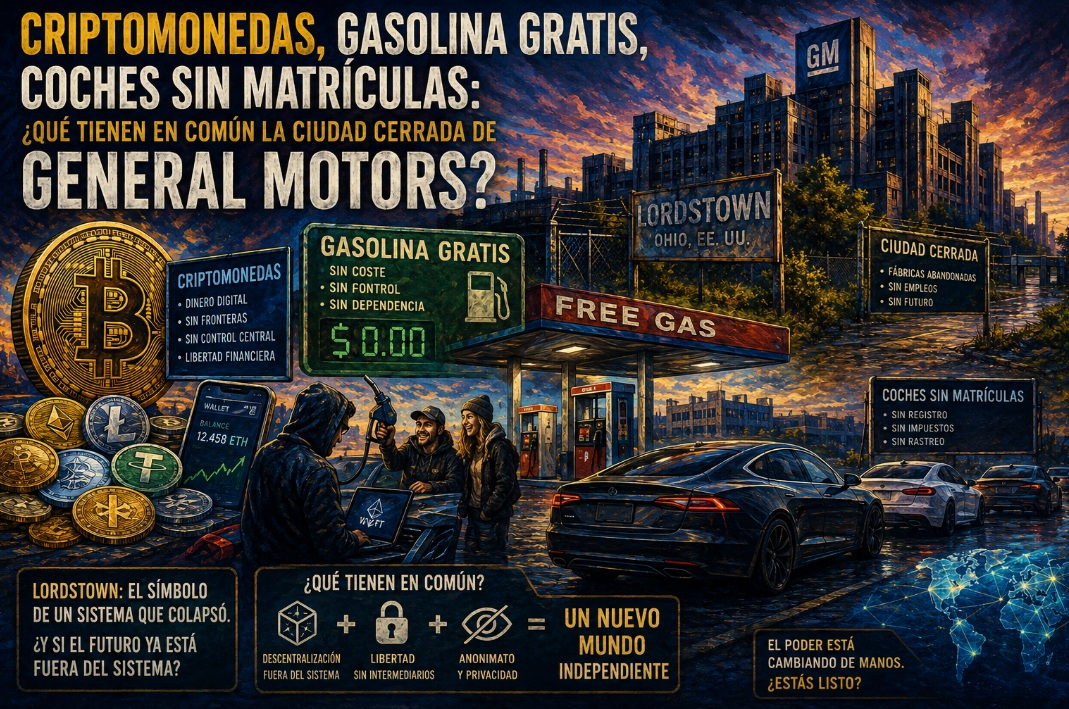
One of the most interesting examples of a technological ecosystem is the Milford Proving Ground in the US state of Michigan. This closed-off test track owned by General Motors, covering an area of over 1,600 hectares, is known as ‘General Motors City’. It is here that design engineers test and evaluate future vehicles, and a very large proportion of the vehicles operate without standard number plates – as testing takes place on private land where internal identification codes are used.
One of the test track’s many striking features is part of the production process, not a social benefit. It was this very feature that sparked the sensational news headlines about ‘free petrol’. In reality, this is not about free fuel for everyone, but merely an employee scheme run by the car manufacturer – staff involved in vehicle testing are reimbursed for fuel costs or use corporate fuel cards (vouchers).
Why cryptocurrency is becoming increasingly intertwined with the automotive industry
Firstly, stablecoins, whose value is pegged to stable assets such as fiat currencies (the US dollar) or commodities (gold), are being used more actively by international companies for fast cross-border payments and settlements.
Secondly, blockchain technology is one of the most effective tools in the automotive industry. It is used both for the digital identification of components and the monitoring of supply chains, as well as for verifying the origin of parts and maintaining the service history of each vehicle.
Thirdly, the modern car is rapidly evolving into a high-tech digital product in which artificial intelligence, cloud services, software and cybersecurity play a very significant role. Moreover, these are no less important than the engine, transmission or any other component.
The use of cryptocurrency in the automotive industry and whether car manufacturers are investing in cryptocurrency
The best-known investor of this kind is currently Tesla. The company decided to purchase Bitcoin and, in February 2021, acquired coins worth US$1.5 billion, which was officially confirmed in its filing with the SEC. Furthermore, Tesla accepted Bitcoin as payment for electric vehicles. However, it subsequently suspended this practice due to environmental concerns regarding the energy consumption associated with mining.
A second example is the DeLorean Motor Company. This company has utilised NFT technology to create new models of customer engagement and digital booking of individual vehicles.
Currently, in the US, Germany, Switzerland, Japan and the UAE, some dealerships accept payment in cryptocurrency or utilise blockchain solutions in their operations.
Although BMW, Ford, General Motors, Mercedes-Benz, Toyota and Volkswagen are actively implementing blockchain technologies in manufacturing, logistics and digital services, there have been no official announcements regarding large-scale corporate investment in cryptocurrency.
The Milford Proving Ground demonstrates that the future of the automotive industry is being shaped not only on test tracks but also in the field of digital technologies. It is here that solutions are born which will subsequently shape the global market.
Although cryptocurrency has not yet become a standard corporate asset for the vast majority of car manufacturers, blockchain has already become firmly integrated into modern automotive manufacturing. Consequently, if the digitalisation of international trade continues at its current pace, the role of stablecoins in international payments and the automotive industry’s financial infrastructure will only grow.